Electric vs. Wood-Burning Harvia Heaters
Selecting between the two fuel types often comes down to installation flexibility versus traditional sauna character. The sections below outline what each option involves and which rooms suit each one.
Electric Heater Options
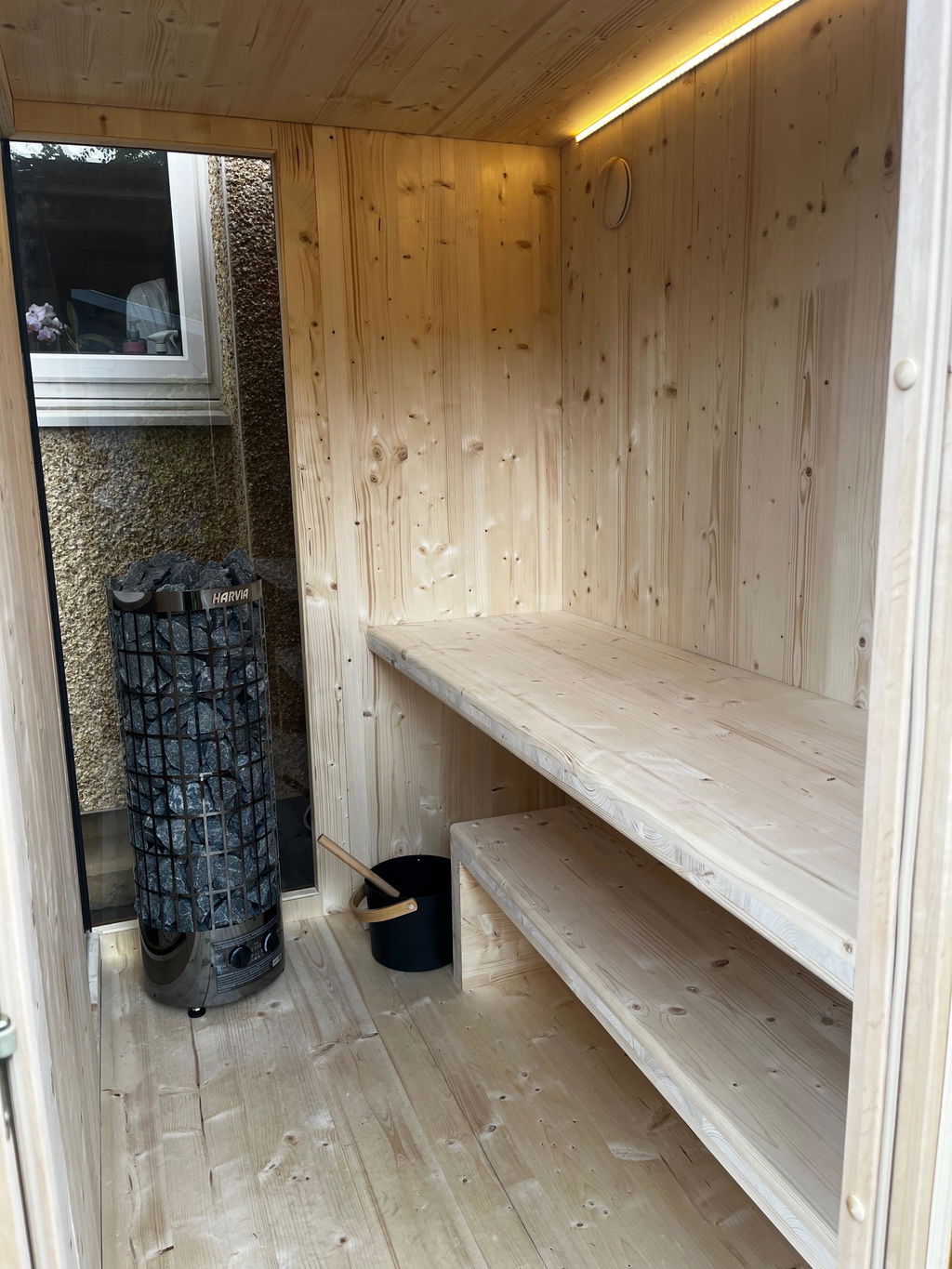
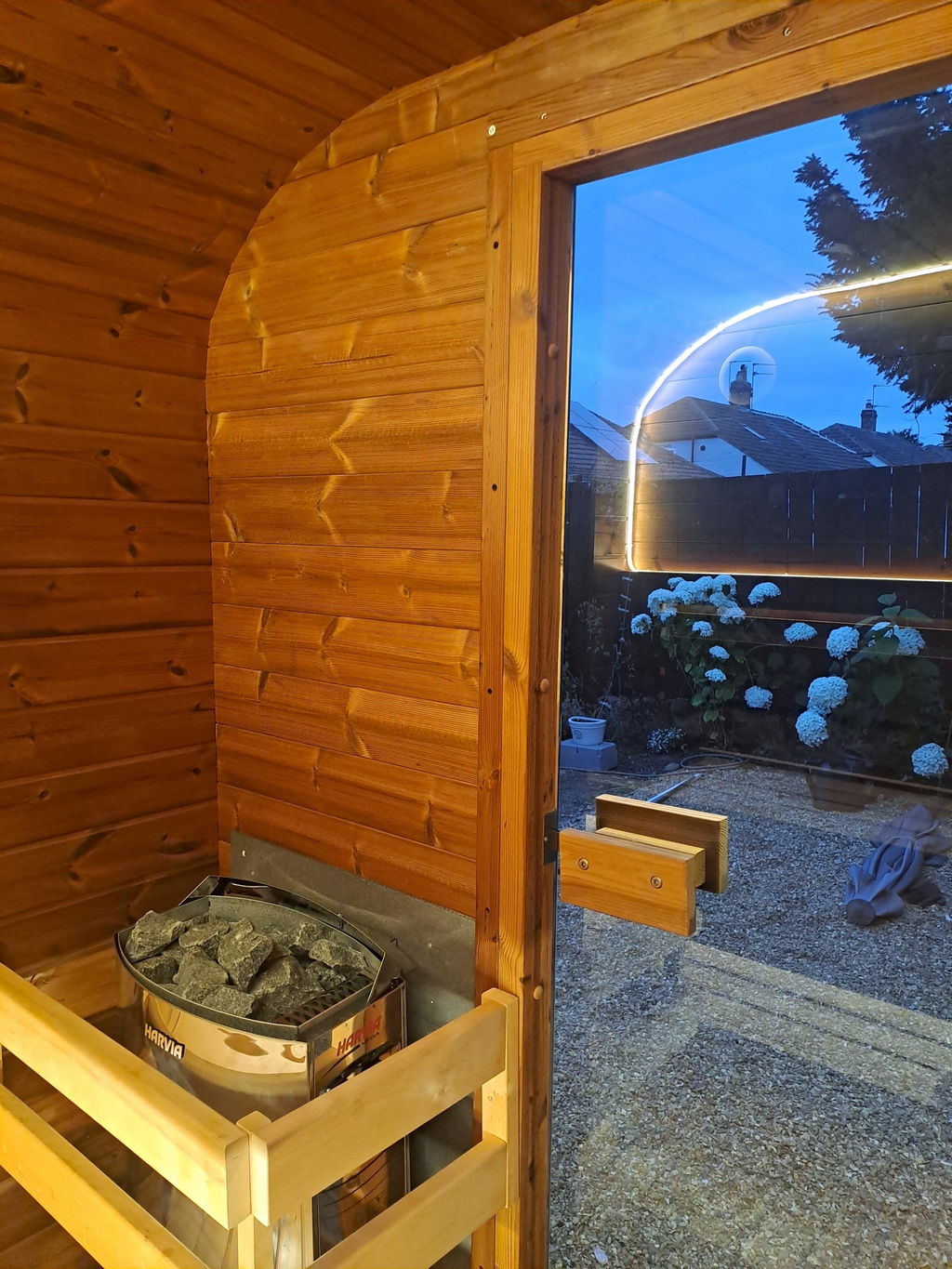
Electric heaters connect to a dedicated circuit and use a control panel for temperature management, making them an easy fit for indoor saunas with existing wiring in place. The Harvia The Wall SWS80, for instance, is an 8 kW model built for rooms between 177 and 431 cubic feet. It mounts directly to the wall with built-in illuminated controls and room for up to 44 pounds of sauna stones.
Wood-Burning Heater Options
Wood-burning stoves need a flue connection and adequate clearance rather than an electrical hookup, and many buyers prefer the fire and stronger steam these models produce. The Harvia M3 is a 16.5 kW stove suited to rooms from 212 to 459 cubic feet, finished in graphite black with a stainless steel airflow spoiler and a floor-mounted design.
Sizing a Harvia Heater to the Room
Matching heater output to room volume is the first step before narrowing down a specific series. The cubic footage listed on each product page reflects Harvia’s tested range for that model, and it applies whether the heater runs on electricity or wood.
Matching Output to Room Volume
Compact electric units or wood stoves generally cover smaller rooms under 450 cubic feet in the 8 to 16.5 kW range. Mid-size and larger rooms would need higher-output wood-burning models with greater stone capacity for stronger steam. If your room has glass walls or tiled surfaces, it needs a slightly higher output compared to a fully insulated timber room of the same volume, since those surfaces hold less heat. Because Harvia’s base room specifications assume ideal insulation, add roughly 42 cubic feet of “virtual volume” to their calculations for every square metre of uninsulated glass or stone.
Dual-Room and Larger Installations
Some wood-burning models are built to heat two connected spaces from a single stove rather than one room alone. The Harvia Pro 36 Duo is a 31 kW dual-room heater that warms the sauna and an adjoining room together. It covers spaces up to 1,271 cubic feet through its glass-fronted design. Installations like this still require the same flue and clearance planning as a single-room wood-burning stove.
Choosing Between Harvia Series
Beyond fuel type, Harvia organizes heaters into named series that group similar designs and mounting styles. Reviewing these series alongside room dimensions helps narrow the shortlist further before checking individual specifications.
Wall-Mounted and Compact Models
Wall-mounted heaters help to save floor space in a compact sauna. The Harvia The Wall Series collection covers the full range of outputs available in this format, including the SWS80 already covered above. This mounting style works well in smaller cabins or rooms where the heater needs to sit flush against a wall rather than take up floor space, and control panels on these models are typically positioned for easy reach from a bench.
Freestanding and Club Models
For larger or commercial spaces, the Harvia Club Series provides freestanding electric units with higher stone capacity than compact wall-mounted models. These heaters suit saunas where floor space allows for a standalone unit rather than a wall bracket. Unlike residential models, these commercial-grade units require external digital control panels mounted outside the room for safety and scheduling. Review the room volume specs on each listing to confirm compatibility before purchase, since output requirements differ with insulation and wall material.
Sauna Stones and Accessories
Both electric and wood-burning Harvia heaters rely on properly sized stones to generate steam and retain heat. Stone capacity varies by model, from around 24 pounds on ultra-compact electric units to well over 130 pounds on larger wood-burning stoves.
Stone Requirements by Model
The Wall SWS80 holds up to 44 pounds of stones, sold separately in boxes sized for that unit, while larger wood-burning stoves such as the M3 and Pro 36 Duo require greater quantities matched to their higher capacity. Checking the specification sheet on each product page confirms the exact stone box count needed before checkout. Replacement stones for any of these models are available through the Harvia Sauna Stones collection.
Comparing Sauna Heater Brands
Harvia is one of several established sauna heater brands carried across the site, and some buyers compare designs before settling on a model. Reviewing alternatives can help confirm that a chosen output and mounting style truly fits the room.
HUUM as an Alternative
The HUUM Sauna Heaters collection features Estonian-designed electric units with a distinct rounded profile compared to Harvia’s more angular lines. Buyers weighing overall aesthetic alongside output and room fit sometimes compare the two brands directly before deciding, since both offer similar wattage ranges across comparable room volumes. Control style and stone visibility often end up being the deciding factor between the two once output requirements are already matched.
Saunum and EOS Alternatives
The Saunum Sauna Heaters collection focuses on airflow-driven designs intended to even out temperature across the room from floor to ceiling, a different approach than Harvia’s more traditional heat distribution. This design tends to appeal to buyers who have found uneven heat to be a problem with a previous heater. Buyers researching additional options sometimes add the EOS Sauna Heaters collection to their comparison as well, which rounds out the electric alternatives available before committing to a final choice.